

If you live anywhere between Dubai, Abu Dhabi, and Sharjah, you already know the drill: step outside for five minutes and your T-zone is shining like you just finished a workout. Between the humidity, the AC-to-outdoor temperature swings, and the sunscreen layers most of us wear year-round, oily skin in the UAE has a uniquely hard job to do. Two ingredients keep coming up as the answer, matcha UAE and charcoal, usually packed into a clay mask. But which one actually earns a spot in your routine, and how does a matcha clay UAE mask vs face wash even compare? Let's break it down properly.
Why Oily Skin Behaves Differently In The UAE Climate
Before comparing ingredients, it helps to understand what's actually happening on your face. Sebaceous glands respond to heat, humidity, and how stripped your skin barrier feels, when a cleanser is too harsh, skin often overcompensates by producing even more oil.
That's a big reason dermatologists lean toward clay-based masks rather than aggressive scrubbing for anyone dealing with excess oil, clogged pores, or breakouts in a hot climate. Clay and adsorptive ingredients are consistently recommended by dermatology bodies as a go-to for oily and acne-prone skin, precisely because they draw out impurities during the 10–15 minutes they sit on skin, rather than scraping it away.
That's the mechanism both matcha and charcoal masks rely on. The difference is in how they do it.
What A Matcha Clay Mask Actually Does
A UAE matcha clay mask pairs finely ground, antioxidant-rich green tea leaves with mineral clays, usually kaolin or French green clay (montmorillonite). The clay pulls oil, dirt, and buildup out of the pores, while matcha contributes catechins, polyphenols, and a naturally calming effect that helps offset the tightness clay masks are known for.
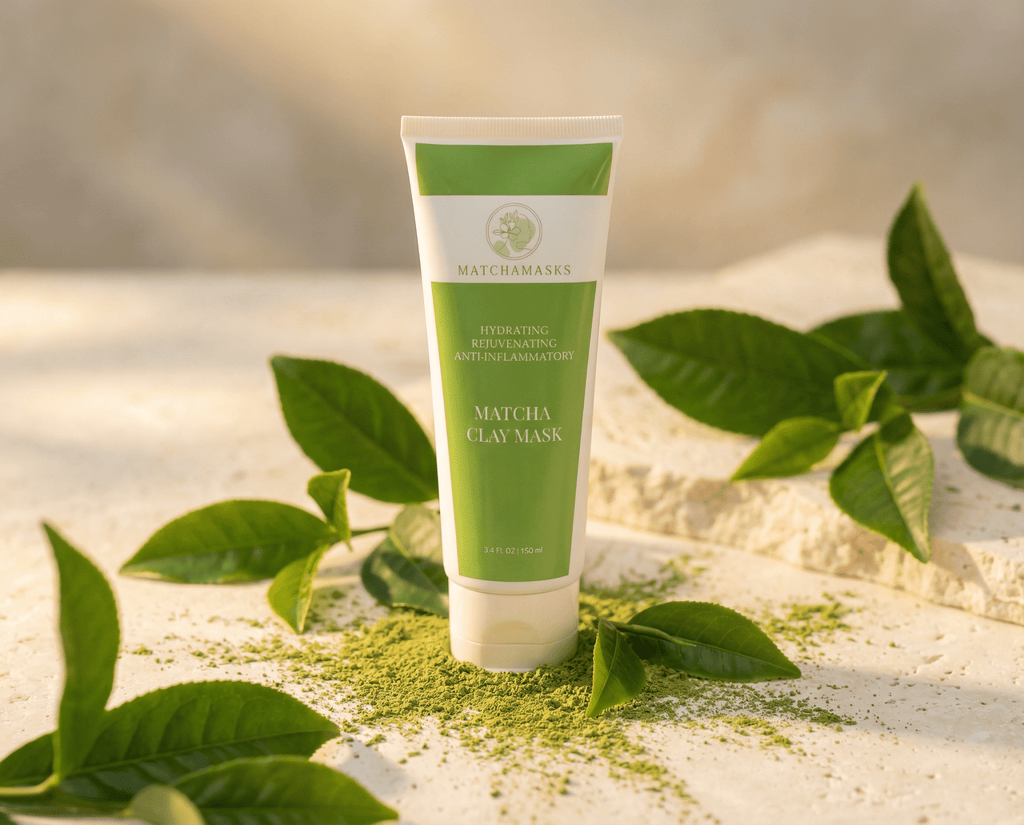
This is the exact formula behind the Matcha Clay UAE Mask, which combines ceremonial-grade matcha with French green clay, aloe vera, and vitamin E, designed to detox pores without damaging the skin barrier. It's built for oily, combination, and normal skin types, and is meant to be used as a weekly treatment, not a daily one.
Key Benefits Of A Matcha Clay Mask:
- Draws out excess oil and impurities via clay
- Delivers antioxidant protection against environmental stress (relevant for UAE sun exposure)
- Leaves skin refreshed rather than tight, thanks to matcha's hydrating plant compounds
- Suitable for sensitive or reactive skin, since it's gentler than most charcoal formulas
You can read a deeper breakdown in UAE Matcha Masks' own guide on matcha clay mask benefits for skin.
What A Charcoal Clay Mask Actually Does
Activated charcoal is a highly porous carbon, usually derived from coconut shells or wood, activated at high temperatures to increase its surface area dramatically. That extra surface area is the whole selling point: charcoal can, in theory, adsorb more oil and debris per gram than clay alone. According to Healthline's overview of charcoal mask benefits, charcoal's antibacterial properties may help lift bacteria from pores, which can support clearer-looking skin, though much of this is still based on anecdotal rather than large-scale clinical evidence.
Like Our Facebook Page Follow Us On Instagram
Key Characteristics Of A Charcoal Clay Mask:
- Very high oil and impurity absorption, often stronger than clay-only formulas
- Can feel more intense and drying, especially in peel-off formats
- Best paired with hydrating ingredients (hyaluronic acid, aloe, jojoba oil) if you have any dryness or sensitivity
- Not ideal for reactive or rosacea-prone skin, since the adsorptive action can be irritating with overuse
Both charcoal and matcha masks work on the same clay-adsorption principle — the real differences show up in strength, sensitivity, and how your skin feels afterward.
Matcha Vs Charcoal Clay Mask: Side-By-Side For Oily Skin
| Factor | Matcha Clay Mask | Charcoal Clay Mask |
|---|---|---|
| Oil control | Strong, balanced | Very strong, sometimes overpowered |
| Skin feel after use | Refreshed, not tight | Can feel dry/tight if overused |
| Antioxidants | High (catechins, polyphenols) | Minimal |
| Sensitive skin friendly | Generally yes | Only with hydrating add-ins |
| Best for | Oily + combination skin, UAE heat, daily sun exposure | Very oily, congested, non-reactive skin |
| Recommended frequency | 1–2x per week | 1–2x per week (less if drying) |
For most people dealing with UAE-climate oiliness rather than severe cystic acne, the matcha clay mask tends to be the more sustainable pick, you get meaningful oil control and pore refinement without the barrier damage that comes from overusing a harsher, more drying charcoal formula.
Matcha Clay Mask Vs Face Wash: They're Not Interchangeable
This is where a lot of people get confused, so it's worth spelling out clearly: a uae matcha clay mask vs face wash isn't really a competition, they solve different problems.
- A face wash (or cleanser) is a daily step. Its job is to remove sweat, SPF, makeup, and surface oil before it has a chance to sit on your skin all day, without disrupting your skin's pH or moisture barrier.
- A clay mask is a weekly, deeper treatment. It goes further into the pore itself to pull out buildup that daily cleansing can't fully reach.
Skipping the daily face wash step and relying only on a weekly mask won't control oil consistently, and using a mask every single day (instead of a gentle cleanser) usually over-strips skin and triggers more oil production, not less. The two are meant to work together, not replace each other.
For the daily side of that pairing, the Matcha Pure Cleanser is formulated as a gentle, pH-balanced face wash that removes oil, SPF, and makeup without leaving skin tight, the ideal daily partner to a weekly clay mask.
Building an Oily-Skin Routine That Actually Works in the UAE
- Morning & night: Cleanse with a gentle, pH-balanced face wash, never skip this, even on humid days.
- 1–2x per week: Apply a matcha clay mask for 10–15 minutes on clean, dry skin, avoiding the eye area, then rinse with lukewarm water.
- Immediately after masking: Moisturize. Even oily skin needs hydration, especially with UAE air-conditioning drying out the air indoors.
- Daily: SPF, since matcha's antioxidant boost pairs well with sun protection rather than replacing it.
If you'd rather not build this piecemeal, the UAE Matcha Ritual bundle pairs the clay mask with the cleanser and Collagen Essence for a complete weekly-and-daily routine at a better combined price.
FAQs
Can I Use A Matcha Clay Mask Every Day?
No, 1–2 times a week is enough. Daily use of any clay-based mask, matcha or charcoal, can strip the skin barrier and increase oil production over time.
Is Charcoal Or Matcha Better For Acne-Prone Oily Skin?
Charcoal may offer slightly stronger absorption for very congested skin, but matcha's gentler, antioxidant-rich formula is usually the safer long-term choice, especially for skin that's also sun-exposed and reactive to UAE humidity swings.
Do I Still Need A Face Wash If I Use A Clay Mask?
Yes. A clay mask is a weekly treatment; a face wash is a daily essential. They're not substitutes for each other.
The Verdict
Both matcha UAE and charcoal clay masks can genuinely help control oily skin, but matcha's balance of oil control, antioxidant support, and barrier-friendly formulation makes it the easier one to build a consistent, sustainable UAE skincare routine around. Pair it with a proper daily face wash, and you've covered both the daily maintenance and the weekly deep-clean your skin actually needs.
Ready to try it? Shop the Matcha Clay Mask now, or message Matcha UAE Masks directly on WhatsApp for personalized advice on your skin type.